Infrastructure as Code: The Secret Behind Scalable Cloud Systems
Understanding how engineers manage servers, databases, and cloud infrastructure using code instead of manual setup

Sandeep Varma

Introduction
Modern software systems rely on many components working together. When people hear the word infrastructure they often imagine roads, bridges, or buildings. In technology there is a similar concept called software infrastructure. Software infrastructure refers to the foundational systems that allow applications to run, store data, and communicate with users.
It is important not to confuse software infrastructure with physical infrastructure. Physical infrastructure includes the data centers, computers, and networking hardware owned by cloud providers. Software infrastructure sits on top of this physical layer and gives engineers the ability to deploy and manage applications.
Even people who are not software engineers have likely heard examples of these systems. A server where an application is deployed is part of infrastructure. A storage system such as an S3 bucket that stores files is infrastructure. A database that stores user data is infrastructure. A system that serves the front end of a website is also infrastructure.
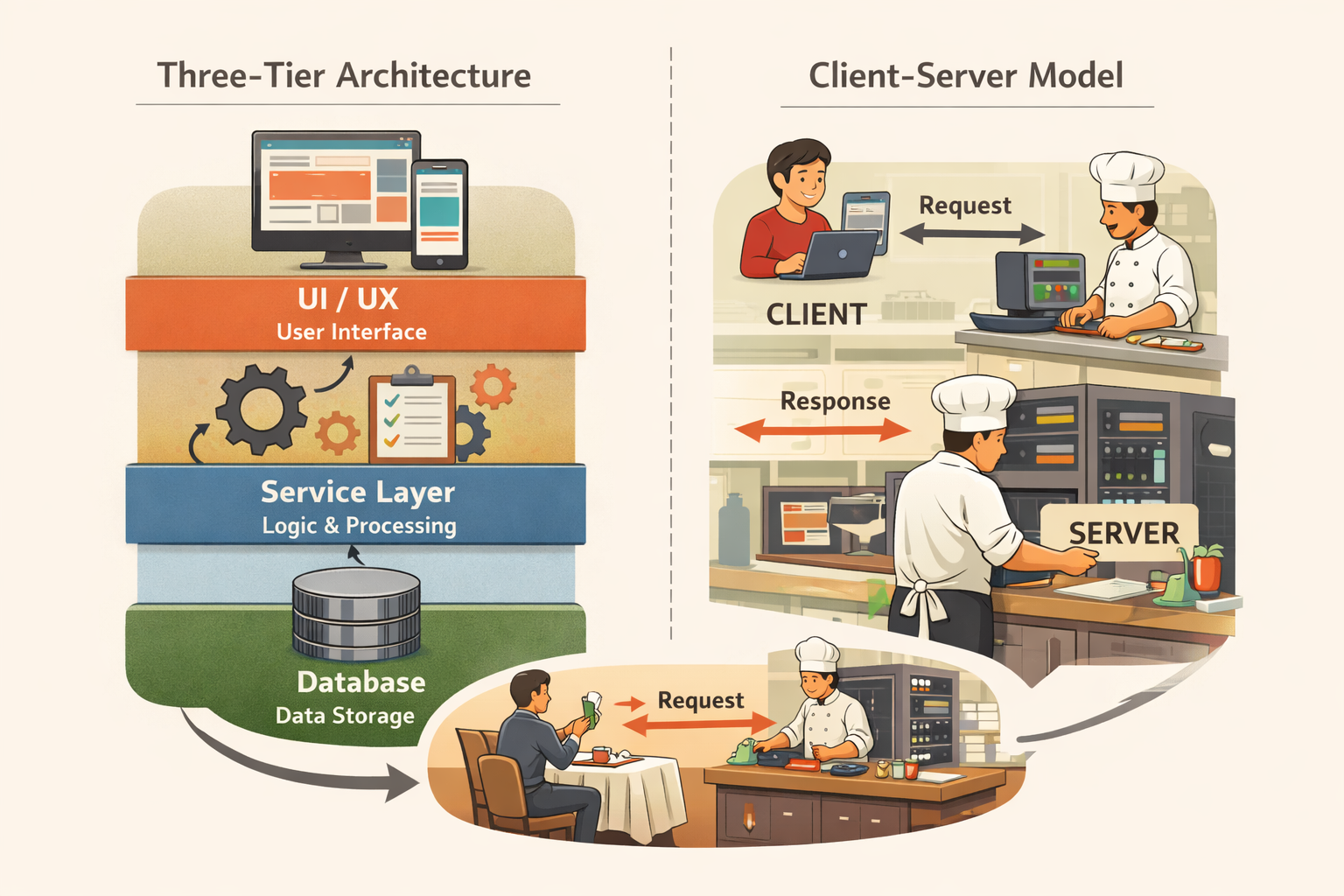
If you are completely new to this topic, it can be helpful to first understand how software systems are structured. In another article named Three-Tier Architecture and the Client-Server Model I explain the common architecture of software systems including front end, back end, and databases. Most of the components in that architecture are forms of infrastructure. Databases are infrastructure. A server running an API is infrastructure. A storage bucket serving static files for a web application is infrastructure.
Understanding that broader architecture helps clarify why managing infrastructure is such an important part of building reliable software systems.
How Infrastructure Used to Be Managed
Before infrastructure as code became common, engineers typically configured systems manually. When someone needed to set up a database server, they would install the database software, create users, adjust configuration settings, and perform many other setup steps.
Because these steps were performed manually, teams had to document everything carefully. Engineers wrote detailed instructions explaining how to install the software, which commands to run, which configuration settings to modify, and which security permissions to apply.
Whenever something went wrong or a new server needed to be created, someone had to follow those instructions again. For example, if a database server crashed or if the company needed a larger machine to handle more traffic, an engineer would go back to the documentation and repeat the entire process.
This approach created several problems. Documentation could become outdated. Small mistakes could occur while following the steps. Two engineers might configure the same system slightly differently. Over time these inconsistencies could cause failures that were difficult to diagnose.
As systems grew larger and more complex, this manual process became both time consuming and risky.
The Core Idea Behind Infrastructure as Code
Infrastructure as code solves this problem by treating infrastructure setup the same way engineers treat application software. Instead of documenting manual steps, engineers write code that describes how the infrastructure should be created and configured.
This code might describe how to create a database server, configure user permissions, allocate storage, and connect the database to other systems. When the code runs, it performs those steps automatically.
The important idea here is determinism. When you execute software code, it produces the same result every time if the inputs remain the same. Think about a calculator. If you multiply two numbers, you will always get the same answer each time you run the calculation.
Infrastructure as code works the same way. When the infrastructure code runs, it creates the system exactly as described. The database gets installed with the same configuration. The same permissions are applied. The same resources are allocated.
This reliability dramatically reduces human error and ensures that systems are created consistently.
Version Control and Infrastructure
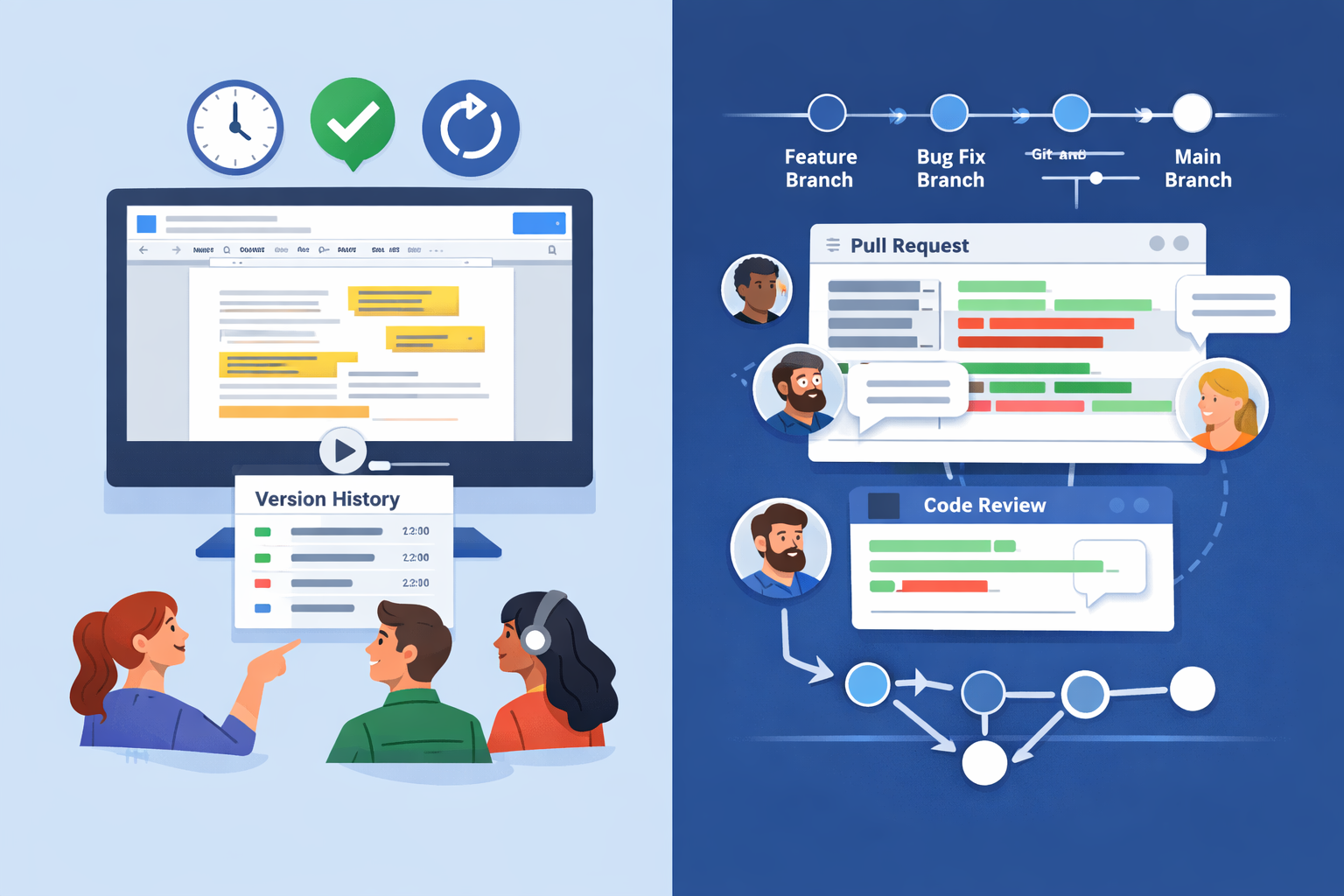
Another advantage of writing infrastructure as code is that the code can be stored in version control systems. This means that every change to the infrastructure configuration can be tracked over time.
If a team modifies how a database is configured or adds new infrastructure components, those changes are recorded as a new version. Engineers can review the changes, understand why they were made, and even revert to earlier versions if needed.
Version control also makes collaboration much easier. Multiple engineers can propose improvements to the infrastructure setup and review each other's changes before they are applied.
In the article Understanding Git and Version Control for Non-Engineers I discuss version control in detail and explain why it is one of the most important practices in modern software development.
Why Infrastructure as Code Matters at Scale
At first glance it might seem that infrastructure as code only helps with small tasks such as setting up a single database. In reality its value becomes much clearer as systems grow larger.
Databases are just one example of infrastructure. Real systems also include application servers, background workers, storage systems, networking rules, and security policies. Many applications also use auto scaling systems that automatically increase the number of servers when traffic grows.
Managing all of these components manually would be extremely difficult. Each piece has configuration settings, dependencies, and operational requirements. Even a small mistake could cause outages or security issues.
Infrastructure as code allows engineers to manage all of these resources in a structured and repeatable way. Entire environments can be created, modified, or rebuilt simply by executing the infrastructure code.
This approach not only saves time but also greatly reduces the risk of configuration errors.
Common Infrastructure as Code Tools
Most organizations today use cloud platforms to run their software systems. These cloud providers offer tools that allow engineers to define infrastructure using code.
Each cloud provider typically has its own platform for describing infrastructure resources and configurations. These tools allow engineers to define servers, databases, storage systems, and networking settings using code rather than manual configuration.
There are also tools that work across multiple cloud platforms. These solutions allow teams to define infrastructure in a provider independent way and then deploy it to different cloud environments.
Some companies also built their own infrastructure automation systems before infrastructure as code became widely adopted. In certain organizations those internal systems are still used today.
Regardless of the specific tool, the core concept remains the same. Infrastructure is defined in code so that systems can be created consistently, reliably, and automatically.
Final Thoughts
Infrastructure as code represents a major shift in how software systems are managed. Instead of relying on manual setup and written instructions, engineers describe infrastructure using code that can be executed repeatedly with predictable results.
This approach improves reliability, reduces human error, and allows teams to manage increasingly complex systems with confidence. As modern software architectures continue to grow in scale, infrastructure as code has become an essential practice for building and operating reliable platforms.
Key Takeaway
Infrastructure as code turns infrastructure setup into a repeatable and reliable process by defining servers, databases, storage, and other system components using software code that can be version controlled and executed consistently.
Have you encountered infrastructure as code in your work or while learning about cloud systems? Share your thoughts or experiences in the comments below. I would love to hear how others first encountered this concept and how it changed the way they think about managing software systems.
Did you find this useful?
Comments
Loading comments...
Please log in to post a comment.
About the author

I write about leadership and software engineering through the lens of someone who’s worked as a software engineer, product owner, and engineering manager. With a Bachelor’s in Computer Science Engineering and an MBA in IT Strategy, I bring together deep technical foundations and strategic thinking. My work is for engineers and digital tech professionals who want to better understand how software systems work, how teams scale, and how to grow into thoughtful, effective leaders.
Continue reading
The Evolution of Software Testing: From Manual to Automation
How a simple two-page app teaches us everything we need to know about why automated testing exists
From Requirement to Release: What Really Happens Inside Software Engineering
Understanding the structured process that transforms requirements into reliable software.